The Problem
Most of the garage doors we look at around here sit on houses built somewhere between 1938 and 2004, with the bulk of that stock going up in the 1960s and 70s. That matters because the bottom seal and side weatherstripping on a door that old were sized for a different set of expectations than what a door buyer gets today. A seal that's thirty or forty years past its install date has usually hardened, cracked at the corners, or pulled loose from the track it sits in. You don't always see it from the driveway. You feel it: a cold strip of air along the floor near the door, a draft that moves a curtain hung ten feet away, a space heater in the garage that never quite keeps up. The gap doesn't have to be wide to matter. A quarter-inch gap under a sixteen-foot-wide door is close to four square inches of open air straight into your garage, and in a lot of these houses, that garage shares a wall with living space. The seal is cheap. Ignoring it for another winter isn't.
What Changes With the Season
Vinyl and rubber seals move with temperature, and that's the part people don't expect. A bottom seal that looked fine in August can shrink and stiffen once the thermometer drops, pulling away from the concrete at the exact moment you need it sealed tight. On a lot of the 1960s and 70s builds common in this area, the slab wasn't poured dead level to begin with, so the seal was already working harder than it should to close that gap. Add a stiff, cold seal to an uneven slab and you get a visible sliver of daylight at one end of the door even when it's fully closed. Side and top seals have the same problem, just slower, because they flex less to begin with. What you're watching for each fall is simple: does the seal still have give when you press a thumb into it, or does it feel like a hard plastic edge. If it's the second one, it's not going to do its job once the real cold sets in.
What to Look At First
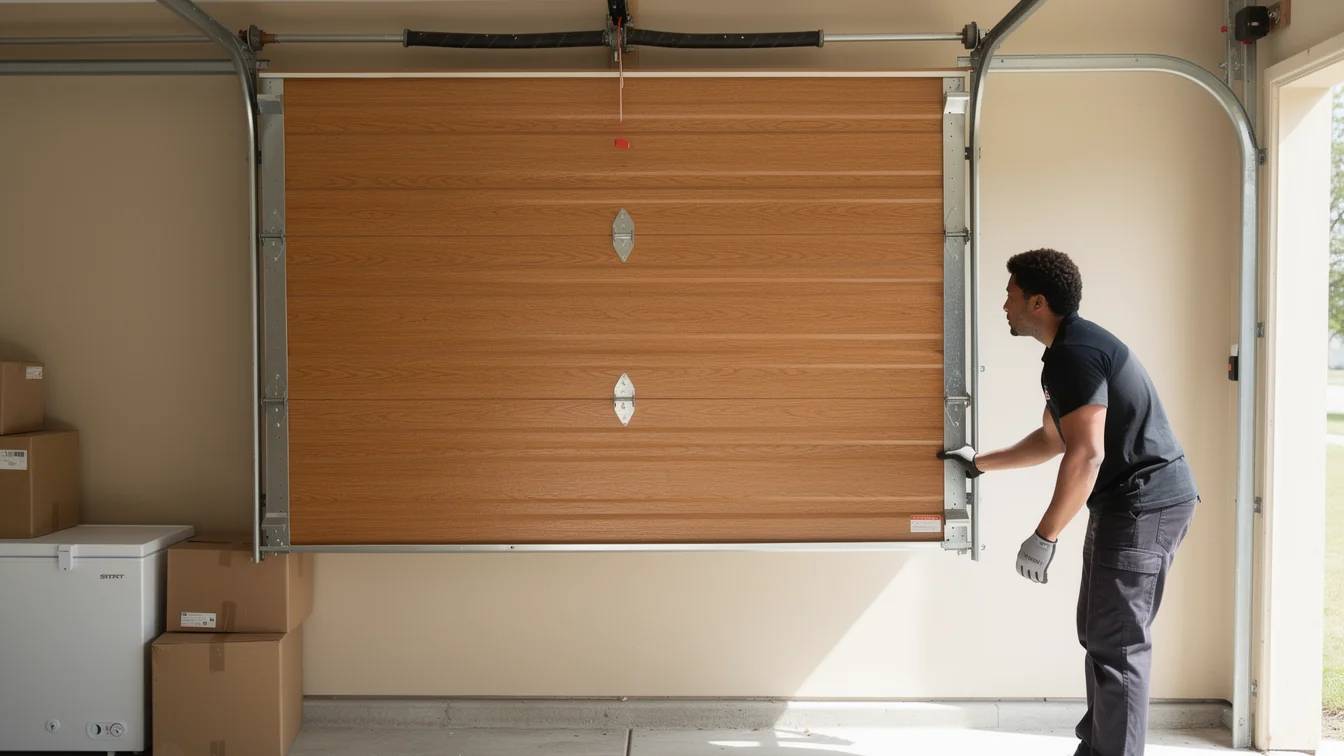
Start at the bottom seal, since it's doing the most work and failing the fastest. Pull the door down and look along the full width for daylight, not just at the ends where people usually check. Next, run a hand along both side jambs where the door meets the frame - on houses from the 1960s and 70s stock common here, that jamb is often original lumber that's shifted slightly over the decades, which throws the seal gap out of square even if the seal itself is fine. Check the top seal where the door meets the header, since that's the one most people forget entirely. If your opener has an automatic reverse or force-sensing feature, don't crank up the down-force to compensate for a bad seal - that's a safety setting, not a weatherproofing fix, and it's the kind of shortcut that causes a different problem later. One honest limitation: we can replace a worn seal and square up a track, but if the slab itself has settled unevenly, no seal is going to make that garage airtight. At that point you're looking at a slab fix, not a door fix.
What the Weather Here Does to It
This area sits in a severe cold climate band, which means the seals on a garage door aren't a comfort upgrade - they're doing real work for several months a year. Repeated freeze-thaw cycling is what actually kills a seal, more than the cold itself. Rubber and vinyl contract hard in a deep freeze, then swell back out as temperatures climb back above freezing, sometimes within the same week. Do that enough winters in a row and the material fatigues, cracks at the fold points, and stops returning to its original shape. On an older door - and a meaningful share of the doors around here are original to houses built decades ago - that fatigue shows up as a seal that looks intact but no longer presses flat against the slab. The fix isn't exotic: a seal rated for this climate band, fitted tight to the track, checked again each fall before the first real cold snap. Skip that check and you're not just losing heat, you're inviting moisture and ice to build up right where the door meets the floor.
Talk to a local pro
Garage door trouble in Harrisburg?
Same-day service with honest, upfront quotes.