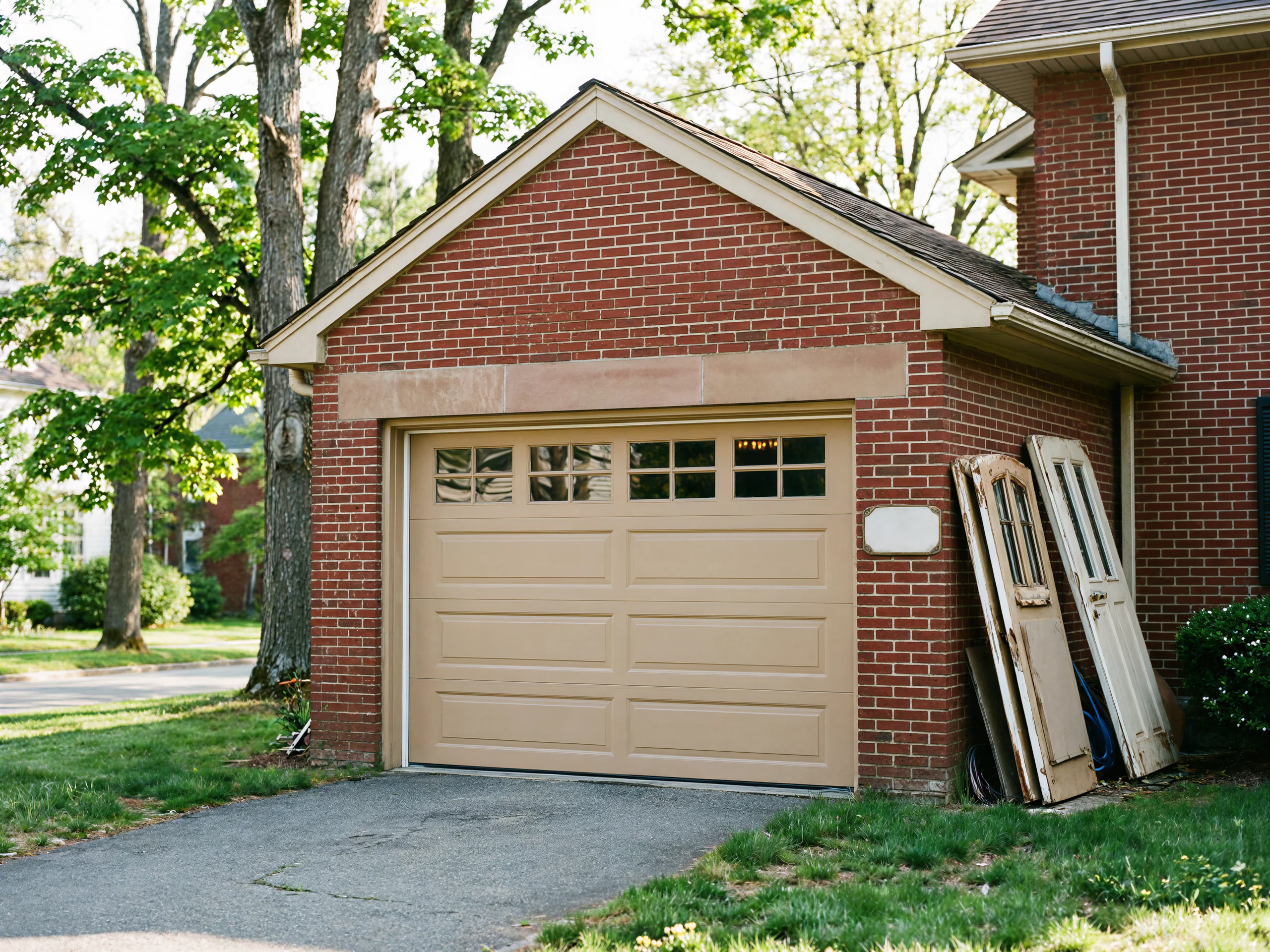
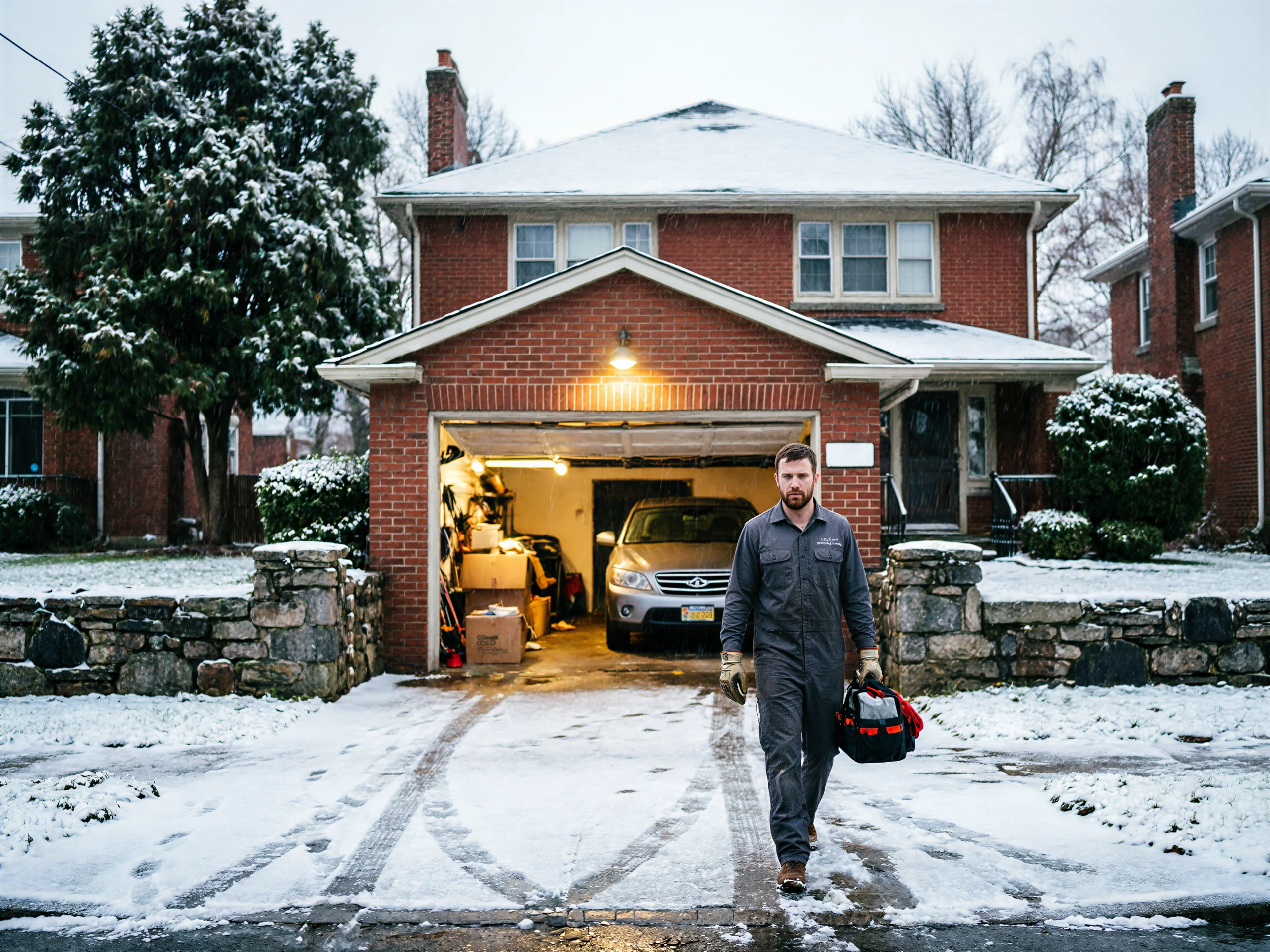
The failure pattern here traces straight back to when these houses were built and what the winters do to them. With housing stock across the service area mostly dating to the 1960s and '70s, a lot of garages still carry their original single-layer steel doors - doors that were never built with insulation in mind because the cold-severe climate band wasn't factored into door specs the way it is now.
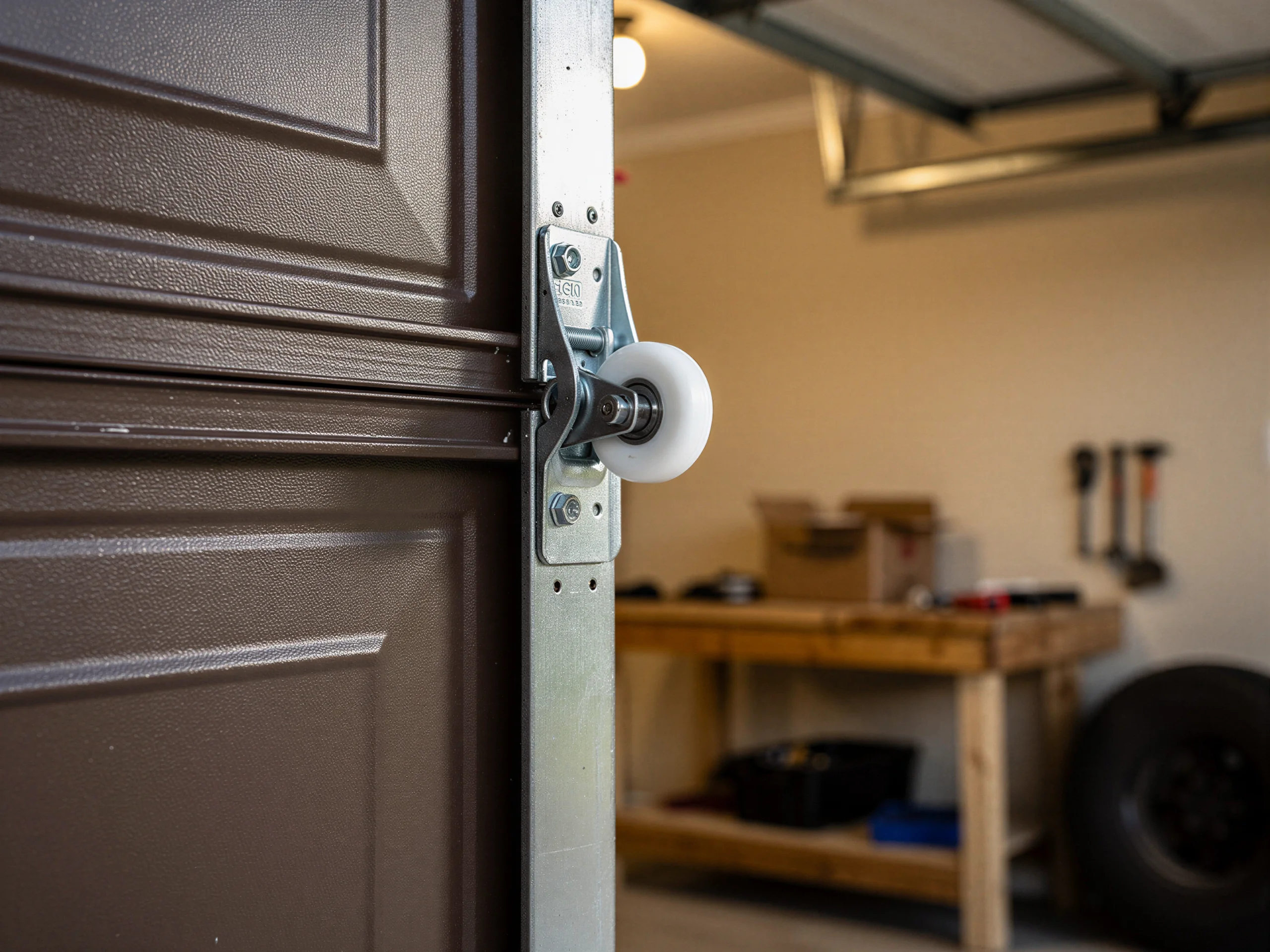
Steel contracts and expands with every freeze-thaw cycle. On an insulated door, the layers move together. On the older single-skin doors common in this area, the panel flexes on its own, and after enough winters the seams crack, the bottom seal stops sealing, and the door starts binding in the track as the frame shifts slightly with ground freeze. That's not a defect - it's forty or fifty years of exactly the kind of cold this region gets, acting on a door that was never designed to take it.
At a median household income of $79,688, most owners here replace a door once and expect it to hold up, not cycle through repairs every few winters. That's the case for installing something built for this climate instead of patching the original one more time.