The Problem
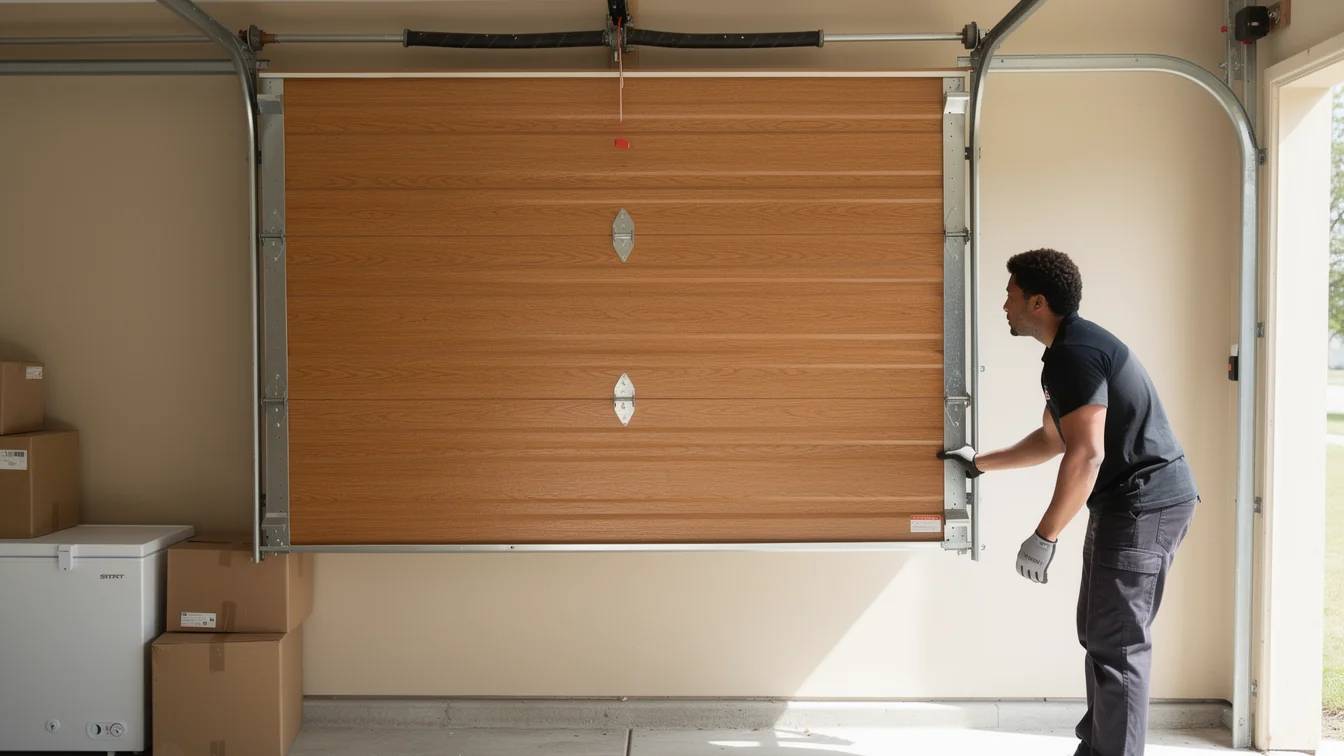
A door off its track almost never happens because someone slammed it wrong. It happens because a roller worked loose from the track, a hanger bracket bent, or the track itself pulled away from the jamb. Once one roller leaves the channel, the whole panel racks sideways, and if you keep running the opener, you bend the track further and turn a $150 fix into a $600 one.
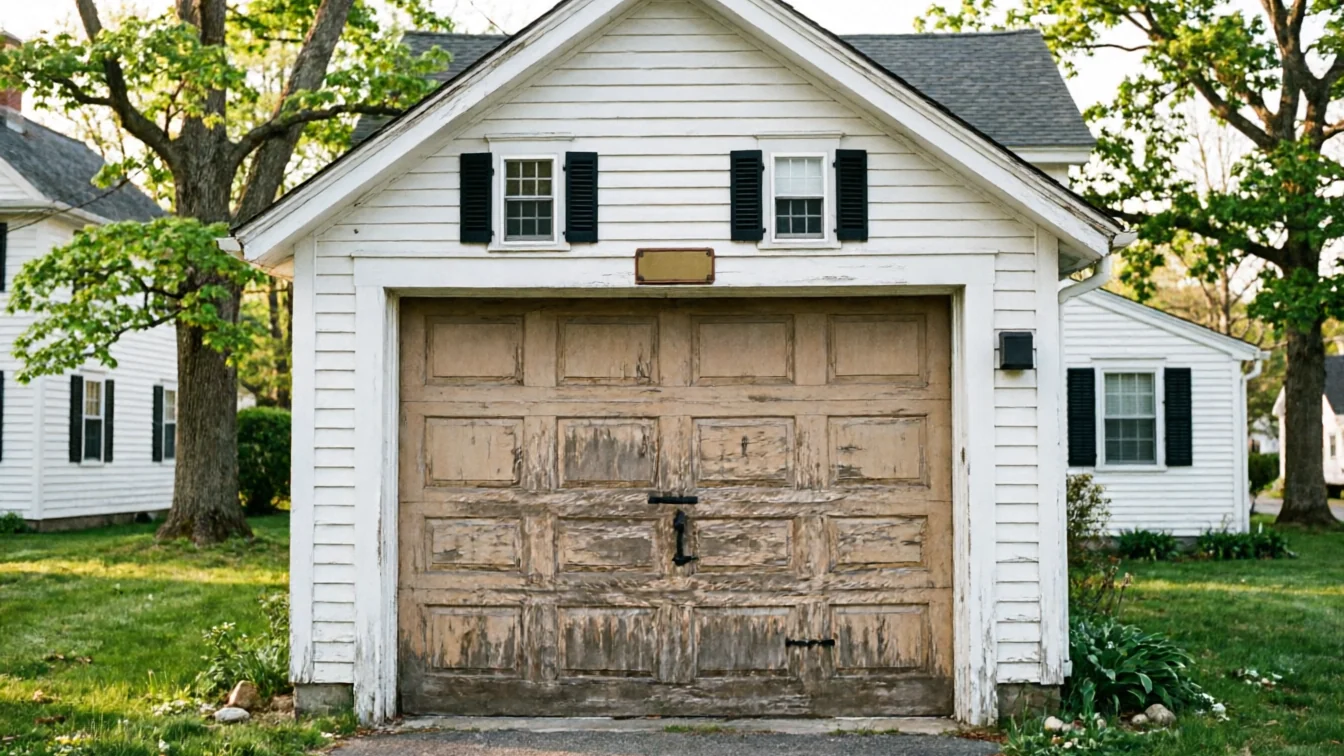
In Harrisburg, the pattern we see most often traces back to the house itself. With housing built between 1938 and 2004 and the median landing around 1970, a lot of the garages still carry original or near-original track hardware - steel that's been expanding and contracting through fifty-plus winters. The mounting bolts that hold track to framing were torqued for a house that's since settled. Settling plus age-softened wood equals brackets that creep a sixteenth of an inch at a time until a roller finally skips the rail.
What Changes With the Season
Spring tension doesn't change with temperature the way people assume, but the wood and masonry the track is bolted to does. In a lot of the 1960s-70s stock across this area, garage framing is dimensional lumber that was never treated for the swings between a humid Pennsylvania summer and a dry, cold winter. That wood moves. A quarter-inch of seasonal shift in a jamb stud translates directly into a track bracket that's no longer square to the door.
You'll usually notice it first in late fall or midwinter: the door that ran quiet in August starts chattering, or one side closes a beat before the other. That's not the opener losing sync - it's the track geometry shifting under seasonal movement in a frame that's decades past its original fit. We get more off-track calls in the first hard cold stretch than any other time of year, and the age of the housing stock is the reason why.
What to Look At First
Before you call anyone, look at three things. First, the rollers - stand where you can see the track from the side and run the door halfway. If a roller is riding the edge of the channel instead of centered in it, that's your early warning, not a trip to the hardware store for WD-40.
Second, check the brackets that tie the vertical track to the door jamb. On a house from the 1960s-70s era, these are often the original stamped-steel brackets, and after decades of seasonal wood movement, the lag screws can back out enough to let the whole bracket rock. You can usually see daylight between bracket and wood if it's loose.
Third, look at the horizontal track near the back of the garage, where it transitions from the curve down to flat. That joint takes the most stress on a door that's already started to rack, and it's where a track usually splits first. If you see a gap or a kink at that joint, stop running the door. One limitation worth being honest about: once a track is bent, straightening it rarely holds for long - replacement is usually the better money.
What the Weather Here Does to It
This region sits in a cold, severe climate band, and that matters more for door tracks than most people expect. Steel track contracts in deep cold, just enough to tighten tolerances that were already tight from age. A roller that was borderline loose in August can bind in January, and a binding roller under opener force is exactly how brackets get yanked off the wall.
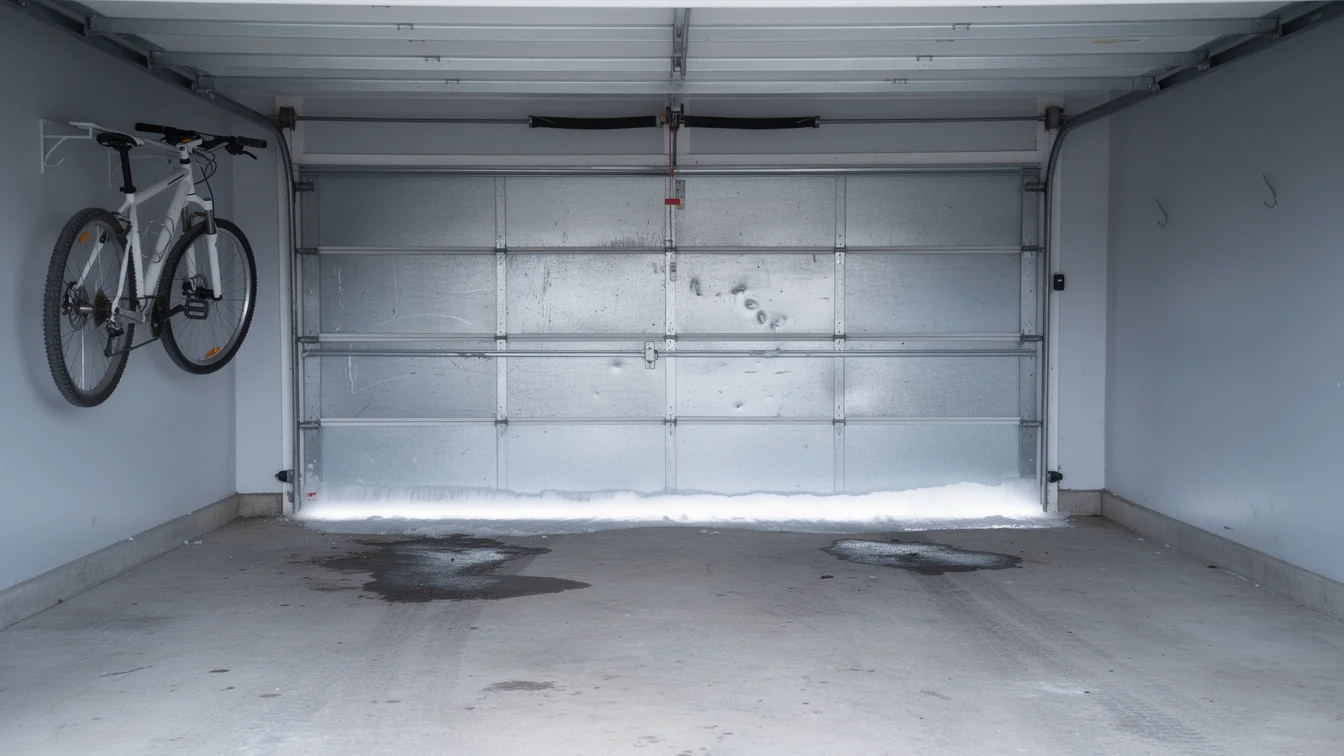
Ice is the other half of it. Meltwater that runs under the bottom panel and refreezes overnight can tack the door to the slab. If the opener fires before that ice lets go, something has to give - and it's usually a roller popping the track rather than the motor stalling. We tell customers here to break that ice loose by hand on the coldest mornings rather than let the opener force it. It's a small habit, but on fifty-year-old track hardware, it's the difference between a door that runs another winter and one that needs a bracket replaced in February.
Talk to a local pro
Garage door trouble in Harrisburg?
Same-day service with honest, upfront quotes.